

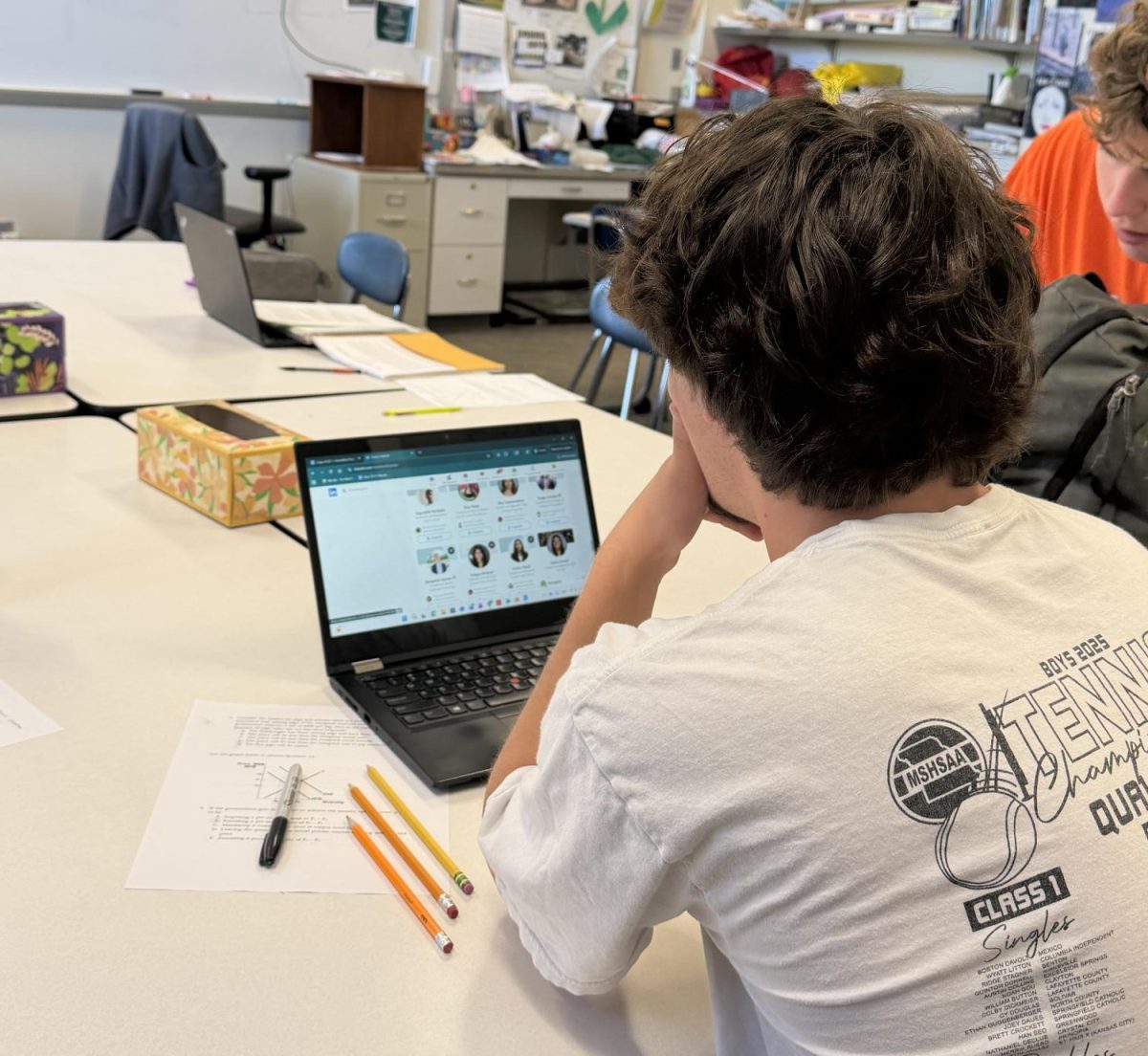



An increasing number of MICDS students are building LinkedIn profiles before they graduate high school. Once considered a platform for experienced professionals, LinkedIn is now part of the college preparation process for many students seeking internships, connections, or, simply, a way to document their accomplishments.
Several seniors say they created accounts within the last year, often encouraged by older students or family members. Lewis Adkins ‘26 became interested after noticing upperclassmen using the platform.
“What motivated me was that I saw a bunch of my friends have it, especially older classmates,” Adkins said. “They told me to make a LinkedIn connection.”
After participating in the Senator Schmitt Youth Council, Adkins used LinkedIn to stay connected with people he met through the experience. Adkins said that he “basically connected with the people through that program and even gained connections to a Senate office.” For him, LinkedIn functions as a way to preserve relationships formed through academic leadership opportunities.
“I connect with almost everyone just because I think it’s MICDS, you’re going to one of the best schools in the state. So you’ve got really good high-end connections that you might not even see in college necessarily,” Adkins said. “So I think it’s important to spam connections now rather than college when there’s just so many people.”
Others discovered LinkedIn via other routes.
“My dad created it for me, so I didn’t really know about it until this year, when I started applying to colleges. He told me that he made me a LinkedIn and essentially put all the activities that I had gained into there,” Lakshmi Madala ‘26 said. “It might not seem helpful for high school, but it definitely does become helpful. If you’re going in a premed track, or if you want internships and other opportunities in college, I think you definitely do have to have a professional-looking profile.”
Some students view LinkedIn primarily as a place to organize activities and experiences.
“I think it really shows a sense of commitment when you start LinkedIn early, and you have a bunch of experiences listed on there,” Eli Meissner ‘26 said. “I think it really helps to log as you go along, so you don’t forget any of the special things you did or experience that you gained.”
Though Meissner believes LinkedIn has its benefits, he also criticized the platform.
“I’ve spoken to people about their internships and then seen them put it on their LinkedIn. They write what they gain, because you can put skills on your LinkedIn, and I’ve seen them put a bunch of skills, including soft skills and software skills, too. They put a bunch of skills from [short experiences], and it’s like, dog, you did that for two weeks, and you weren’t there half the day. You were on Fortnite more than you were on your internship.”
Several students said that viewing others’ profiles can influence how they think about opportunities. Karthik Krishnaswamy ‘26 explained that seeing profiles with strong activities can encourage students to pursue similar experiences.
“I think seeing people’s profiles may push people to want to be better,” Krishnaswamy said. “Once you see a profile that has really good internships or activities, then you feel motivated to do that yourself. And I would say that’s probably the biggest benefit. People definitely exaggerate way too much on LinkedIn, but it’s definitely something you can still use to your benefit. I think that’s what I did. So, like, even if you see someone who’s exaggerated a lot, you’ll still feel more motivated to do better yourself. And, you know, it can be healthy competition, but at times, I know of people as well who go a little too crazy with it.”
Adkins agreed: “Yes, for sure, LinkedIn users exaggerate, but it’s kind of part of the game of LinkedIn.”
Not all students feel that LinkedIn is necessary during high school.
“I feel like I don’t really need it in high school,” Bella Anadkat ‘26 said. “I think it’s very helpful if you’re going into business or something where networking and making connections are very important to your success, but I’ve been interested in medicine for a little while. So I don’t really know how applicable that would be to being a very helpful thing in my career.”
“I don’t know right now if not having a LinkedIn page is like a huge setback for people, but I’m sure that it is a good way to manage and kind of organize your connections to reach out to a bunch of people.”
Aside from students, teachers have also noticed changes in how early students are thinking about careers. Zaven Nalbandian, History teacher, explained that when he was in school, students often explored options differently.
“Unlike today, students were not as career motivated in high school; high school was something that you went through to prepare yourself for college. Today, it seems most students know what they want to major in before they graduate high school,” Nalbandian said.
“I know that with LinkedIn, students are exposed to many, many more careers much earlier in life. My fear is that you’re gonna get kids who make a decision about what they want to be in life at a very young age, before they even know who they are,” he said. “And then they start pursuing that field, and they go through and spend all this money and all this time pursuing that field. And then once they get into the field, either in college or in the workplace, they find the field unsatisfying. And often they feel trapped.”
Nalbandian concluded: “Just spend your time being curious. And instead of trying to build up a bunch of programs that look good on paper, try to find things that really speak to you. If you do an internship and it’s not fun or you don’t enjoy it, then maybe that’s telling you that’s not the career for you.”