
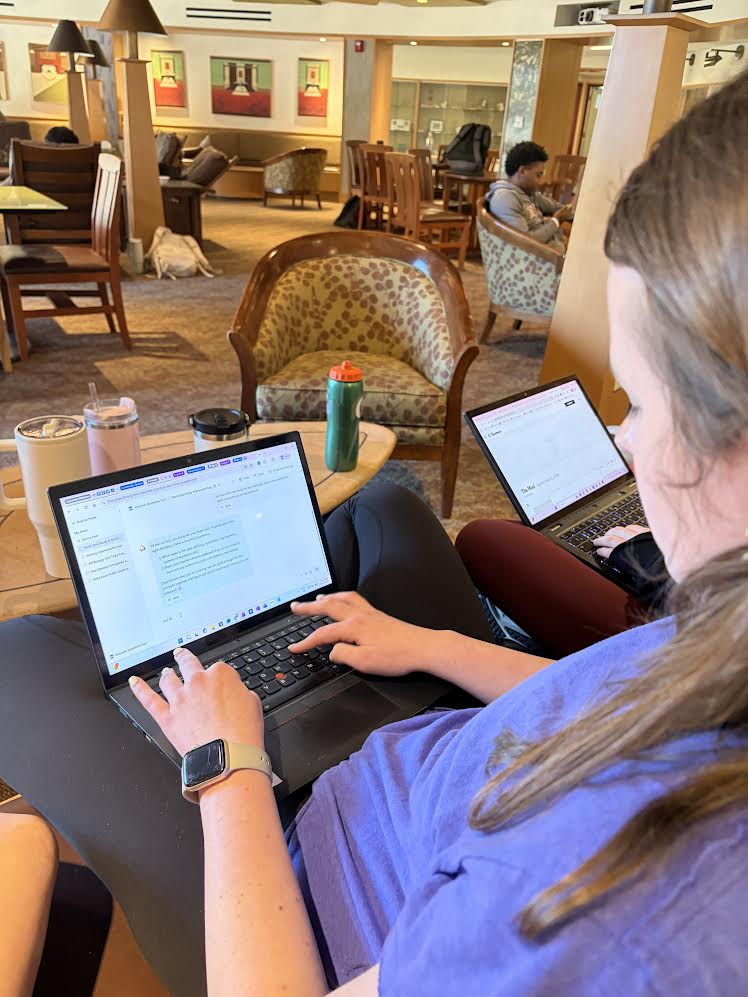
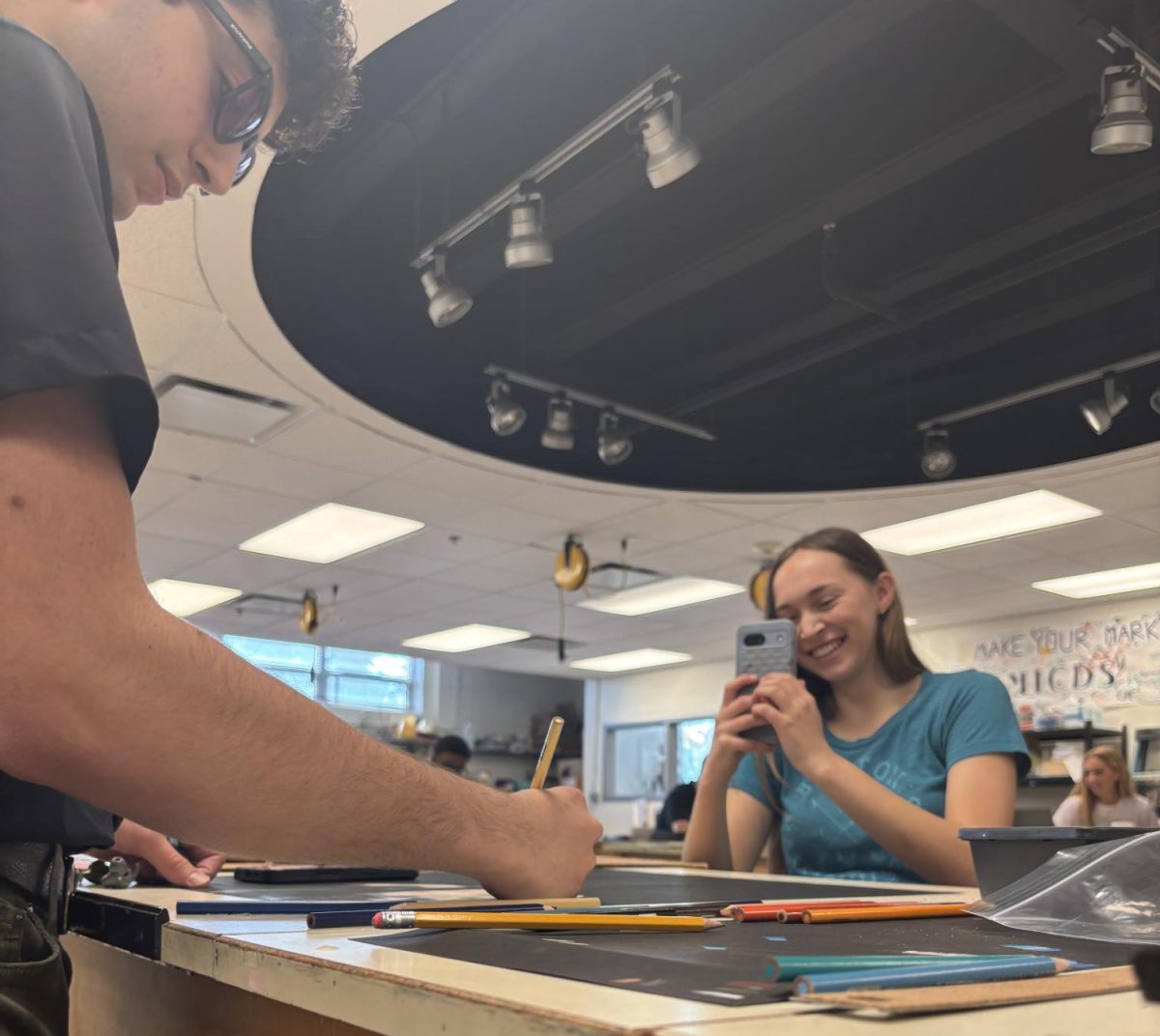
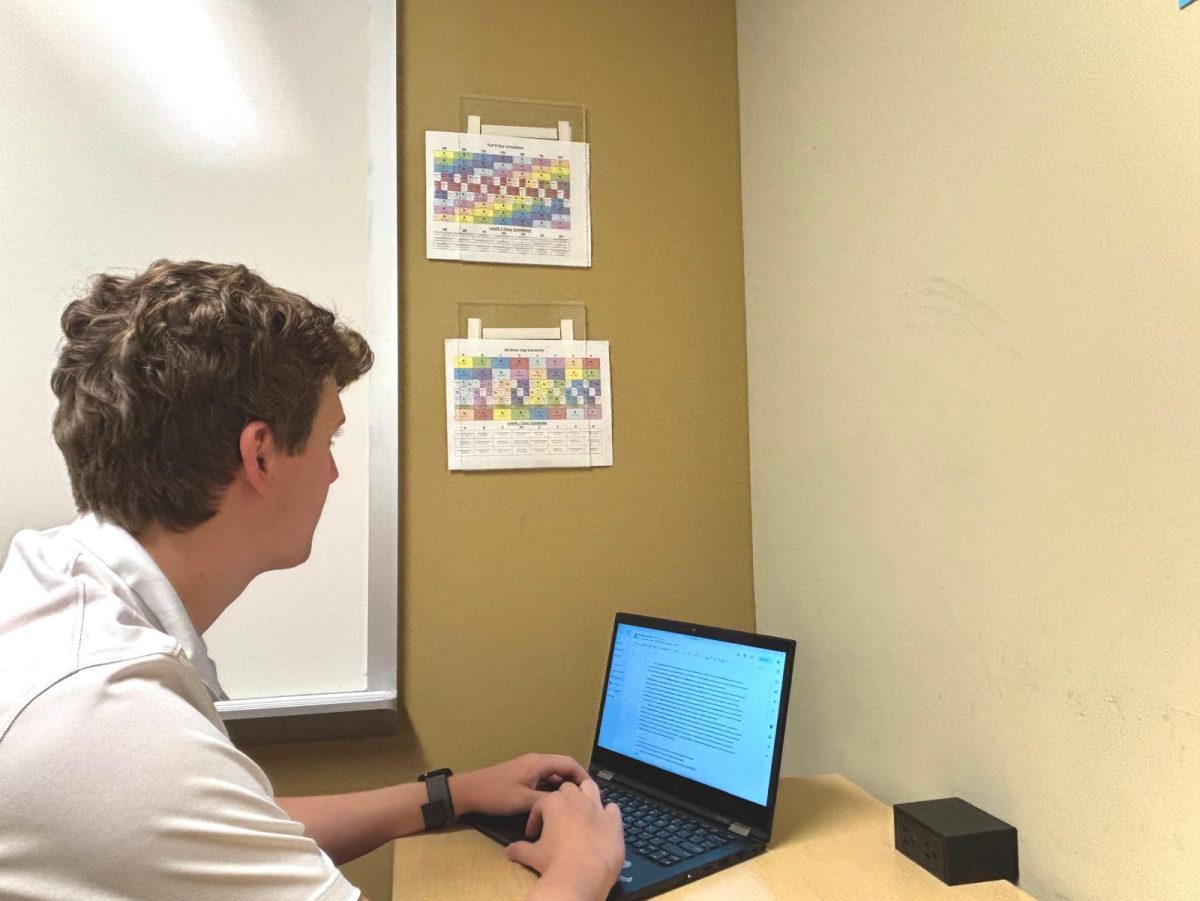
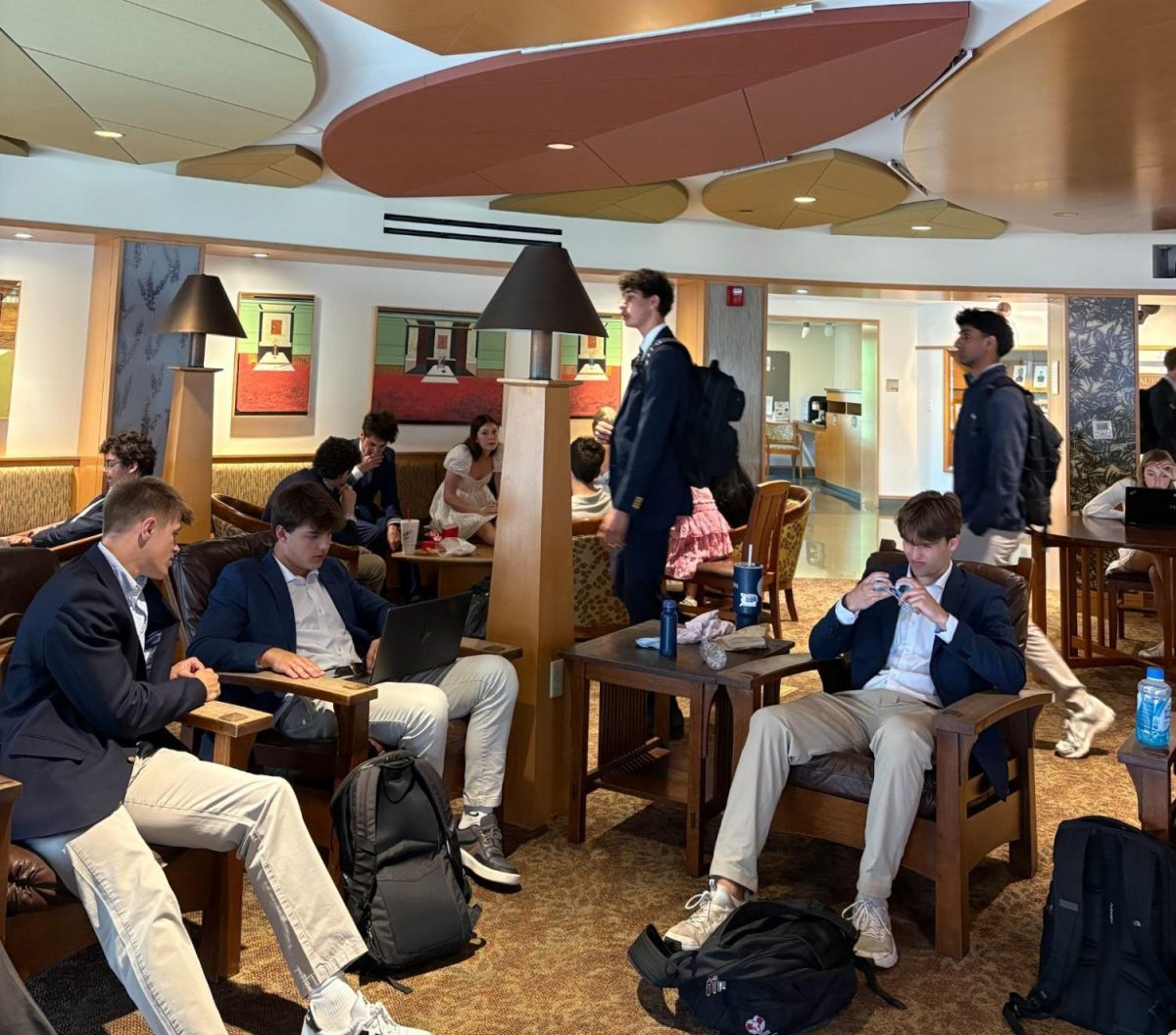
Each Spring, Upper School students are given the opportunity to register for their courses for the upcoming academic year. Throughout their time in high school, students are offered options in their course selection process, ranging from English to math to art and more. This year—before the beginning of March—over 600 Upper School students finalized their course selections.
Freshmen and Sophomores have less flexibility than Juniors and Seniors in their course options due to the need to fulfill course requirements for graduation.
The rigidity of the early curriculum is “a fact of not having the space in the schedule with six classes,” Brian Rueckert, Upper School Registrar, said. “To meet the graduation requirements, we’ve got to take the classes that are in the prescribed curriculum.”
“I wish we had other options for core classes rather than just accelerated and normal,” Maggie Sharp ‘29 said. Most of the choices offered to these students are in foreign language and arts classes.
Junior and Senior students are able to select from a wider range of classes, including Advanced Placement courses.
“I know there is a perception among students that ‘I have to load up on as many AP classes as possible,’ but I say to take something that you are actually interested in doing,” Rueckert said.
“I always tried and was engaged in the other classes, but now it’s just, it’s more interesting. I’m more interested on a daily basis,” Ian Zar ‘26 said. Zar, who is taking Mobile Application Development this semester, said he enjoys the class because “you can do whatever you want and kind of make your own project for the whole semester,” providing “a lot of time to explore what you want to do.”
Similar trends have been noted by other students in the senior class.
“I got to take biology, which was probably my favorite class that I’ve taken, and instantly my engagement in class went up a lot, and I wanted to go to school more,” Carrie Clennan ‘26 said.
Students also have classes that they wish they could add to the course offerings.
Students have expressed a desire for more classes that they could use to prepare them for the future in the curriculum. “I feel like a semester-long life skills course would be interesting to a lot of students because it prepares you better for the future, and since we’re a college prep, I feel like it’ll prepare us for college,” Zar said.
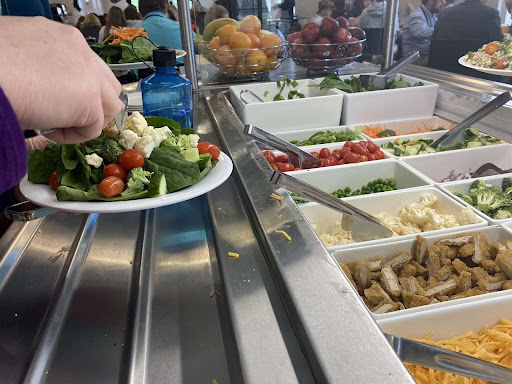
“I think Cooking would be a good break to just learn the culinary arts and also socialize with friends,” Sharp said.
“I think not including a food lab in the STEM building was an oversight, especially with how popular the food classes have been in Winter Term,” Rueckert said. “Everybody is interested in food and cooking, and we had some really high levels of expertise with food science,” Rueckert said. “Staffing would be a constraint, along with the schedule itself and the block rotation.”
MICDS implemented Winter Term during the 2023-2024 academic year, and it has provided some alternative and creative source options. Winter Term is a two-week period when students take two classes—or a trip—of their choosing outside of the typical curriculum.
“I like Winter Term. It’s like the first two weeks you can ease back into being at school, and I feel kind of free,” Sophie Hill ‘27 said.
“I think it does provide something that is unique and allows teachers and students to explore different passion projects that they might be interested in outside of what we would normally offer,” Rueckert said. “Even though there is lost time in second semester, it does provide a soft start.”
The current MICDS schedule typically allows six courses, a free period or study hall, and collab and advisory time. “The way that our curriculum is designed, we do have a lot of electives compared to some other schools. Students have the ability when they get into those upper grades to specialize more. If you want to focus more on STEM or if you want to focus more on humanities, you have the ability to do that,” Rueckert said.
“I think that there’s definitely a variety of different electives that you can take, especially in life sciences and social sciences. You can do things like botany or anatomy or computer science, stuff like that, but you can also do government and micro,” Clennan said.
On the other hand, Zar noted, “In some areas like STEM, I feel like there are more. I guess in some areas there’s enough, but others there could be more.”