


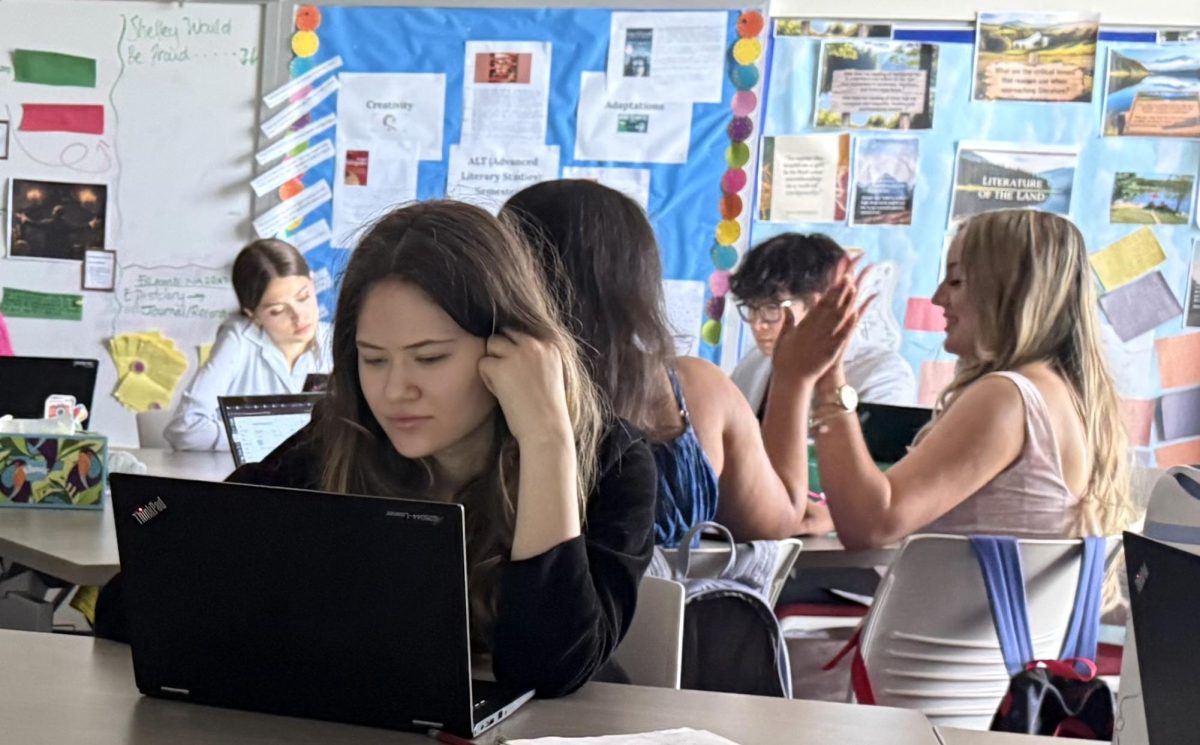
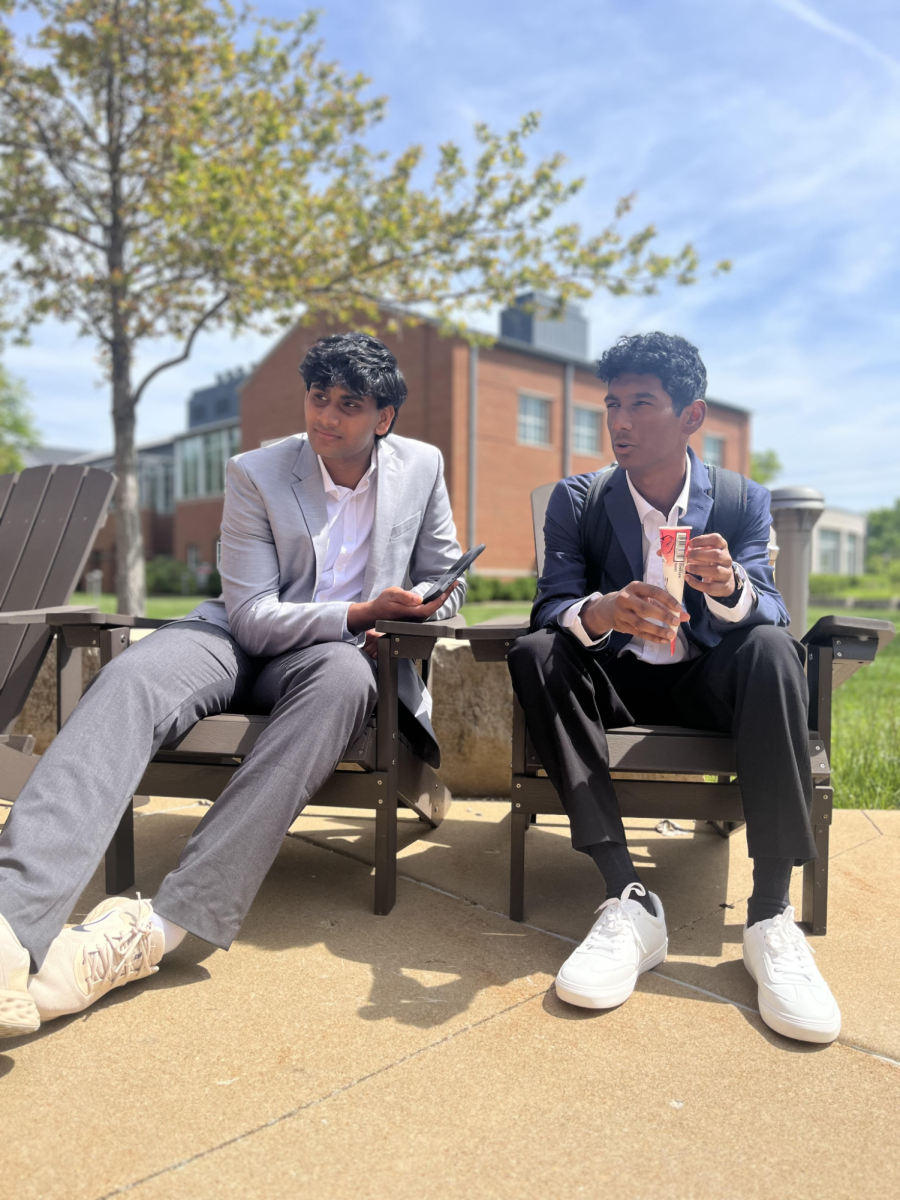
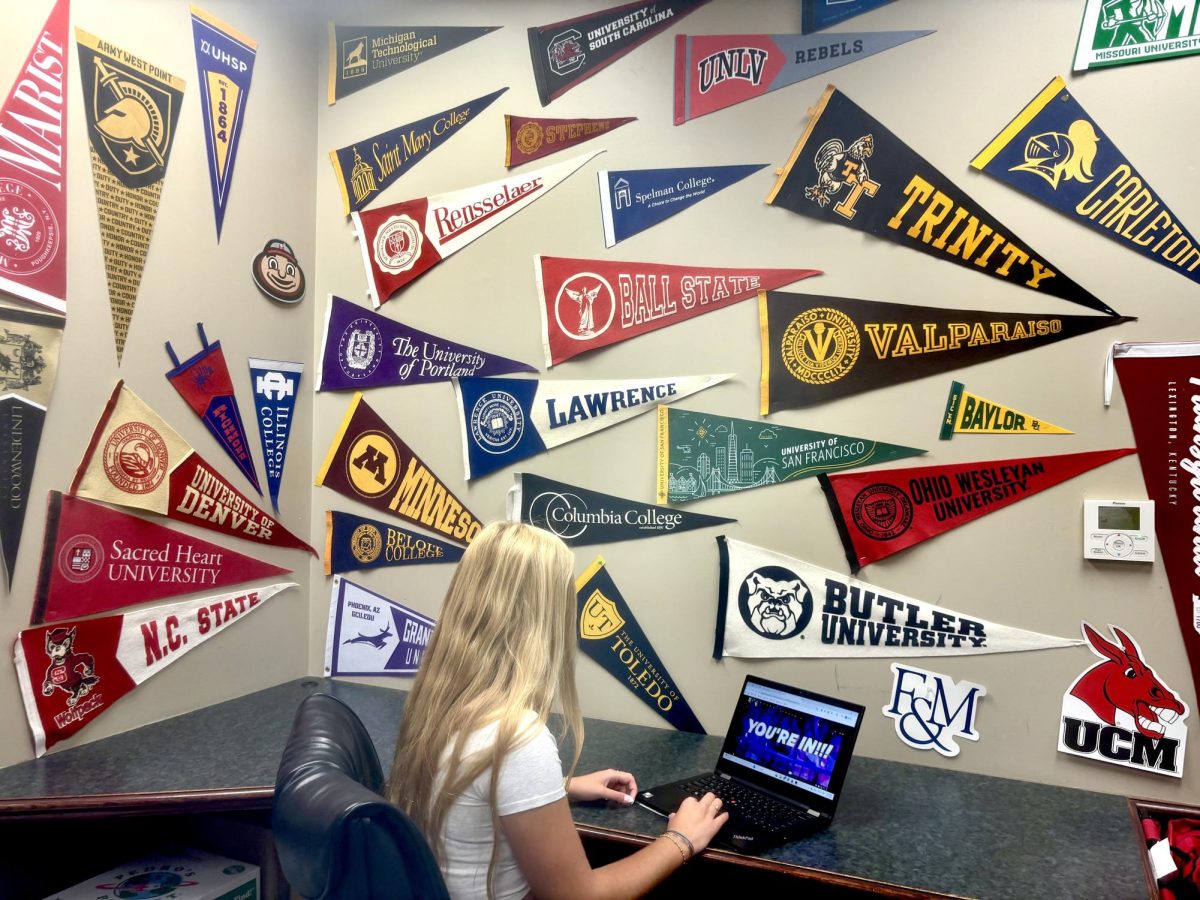
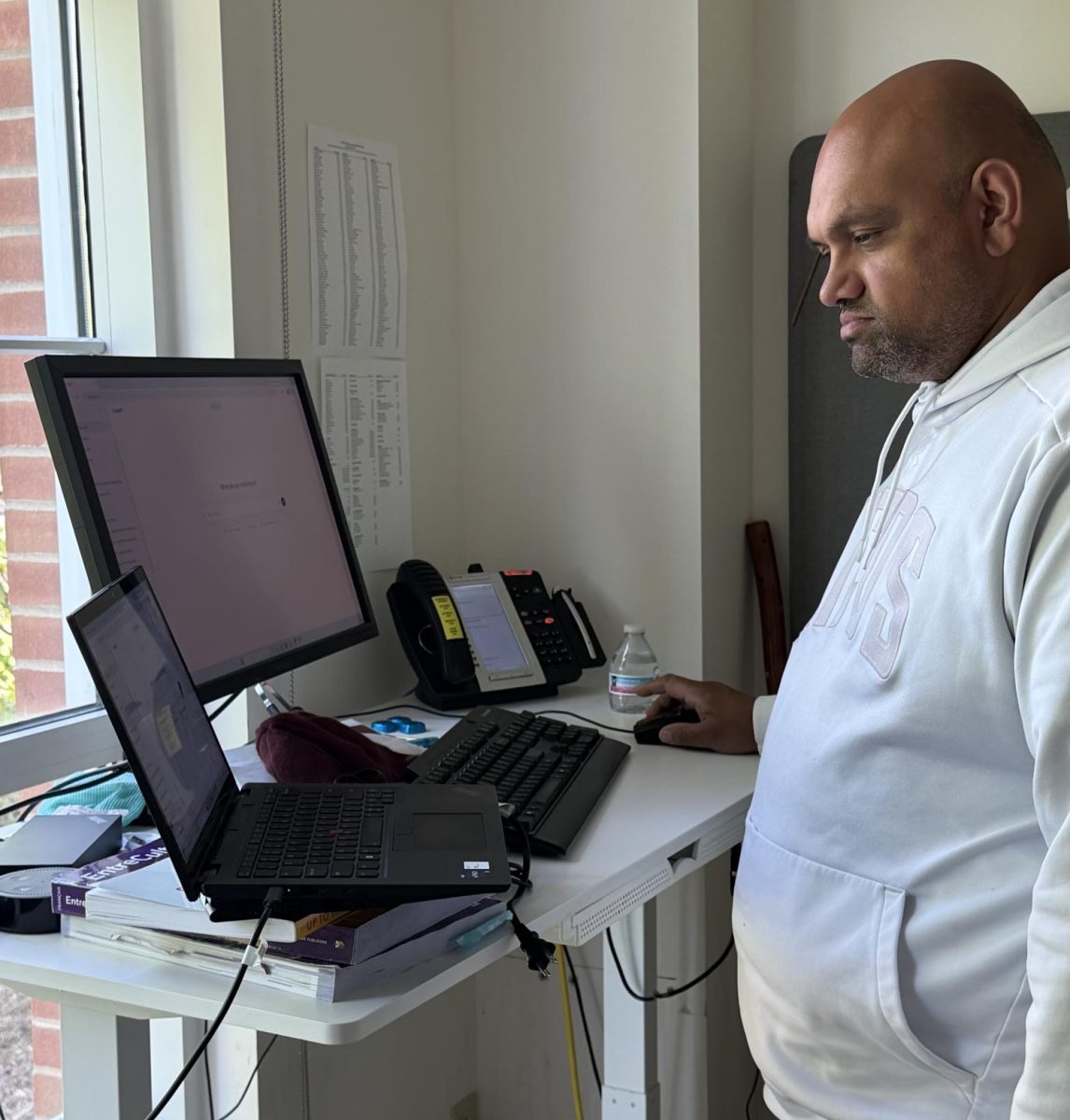


At MICDS, AI is often at the forefront of academic discussions. ChatGPT, Claude, Gemini, and Flint are names that float around the hallways. AI is now integrated in many places, in every Google search, every laptop, and many lesson plans. It’s been nearly four years since ChatGPT went public in November 2022, and it has continued to improve at an unprecedented rate, leaving teachers and students to navigate one of the biggest technological inventions since the early days of the internet.
For many students, AI has become the default way to find answers. “If I have a niche or just a random question that I’m thinking about, I’ll usually just use AI to answer it instead of looking it up myself,” Max Allgeyer ‘26 said.
Other students who don’t directly use AI to answer questions are still using it through Google’s new AI summaries. “I use Google AI summaries 100% of the time, that’s just the information that I rely on, unless I’m actually doing some sort of research,” Carrie Clennan ‘26 said.
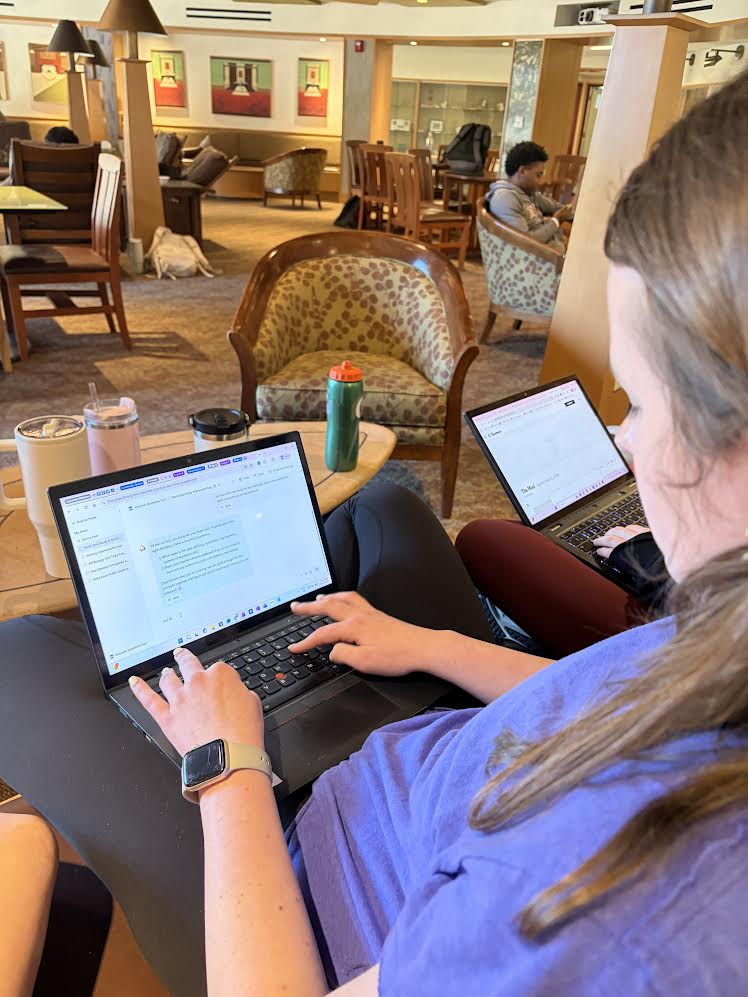
Students aren’t just using AI as a replacement for Google; they also use it to study. “I use AI to make practice tests for math and AP Psychology. I think AI makes learning more catered to you,” Matthew Carmody ‘26 said. Other students opt to use Flint AI, which is MICDS’ monitored AI model. Flint AI was created to help ease and monitor the use of AI at MICDS.“Flint’s purpose is to kind of be like a teacher’s assistant, I’ll just ask, hey, is this a good way to frame it?” Clennan said.
Teachers share a different view of AI. “Because of AI, I have started teaching a little bit more old school with paper and pen,” Daniel George, Dean of the class of 2026 and French teacher, said. However, George also acknowledged that AI is useful for teachers as well. “AI has enhanced the quality of work that I can shoot out to students,” George said. “What I don’t like AI to be used for is to do the thinking process. The biggest thing I’m worried about is the cognitive ability of students actually going down. You guys are the first generation of folks whose cognitive ability has actually gone down as a result of technology.”
Paul Zahller, Science Department Chair and one of the authors of MICDS’s current AI policy, shares a more optimistic view of AI while still acknowledging the potential dangers. “I’m very optimistic about the use of AI for individualized learning,” he said. “If I am confused about a topic, I can type in and have some dialogue, and through that I can learn a lot really quickly.” Zahler also says he notices AI in student emails very often. “I get all these emails from kids all the time, and they look like they were run through AI. I’ve never had so many people say ‘I hope you are well’ before this year,” Zahller said.
AI policy is something at MICDS that is always under scrutiny from students. “I’d say it’s a step in the right direction, but the execution is just a little lackluster,” Allgeyer said. “We’re using a very limited version of AI that only really helps in some minor situations.” Carmody added, “AI should be implemented more to kind of teach the students how to use it, rather than making it into the devil.”
Even one of the authors of the AI policy suggests that it may be lagging behind. “It was pretty good at the time when we put it into place,” Zahller said. “It’s already in many places; it needs to be updated. It’s no longer valid in some areas. We need to be bringing AI into the classroom spaces in use with kids in ways that are approved for kids of this age.”
George also suggested that schools like MICDS could benefit from increasing the usage of AI in the classroom, as long as the thinking process is still completely human. “You have to explain orally: this is my process, this is my approach, this is how I used AI. Just be upfront about it,” George said.
AI is clearly forcing educators to think differently. “The version of school that we have now is probably not a stable version of school for the future,” Zahller said.